
Hiring a Deck Builder vs Building It Yourself
You have a weekend, a truck and a stack of lumber prices open on your phone. The question is whether the deck in your head is a weekend job or a job for a crew.
A small, low deck that sits on its own footings and does not touch the house can be a fair DIY job. A raised deck, a deck on a slope or a deck bolted to the house is where mistakes turn into safety problems.
- Footings and the ledger board cause most failures.
- Clay soil east of I 35 moves footings that are too shallow.
- Guard rails become a code issue once the deck is high off the ground.
- A permit is often needed for raised or attached decks.
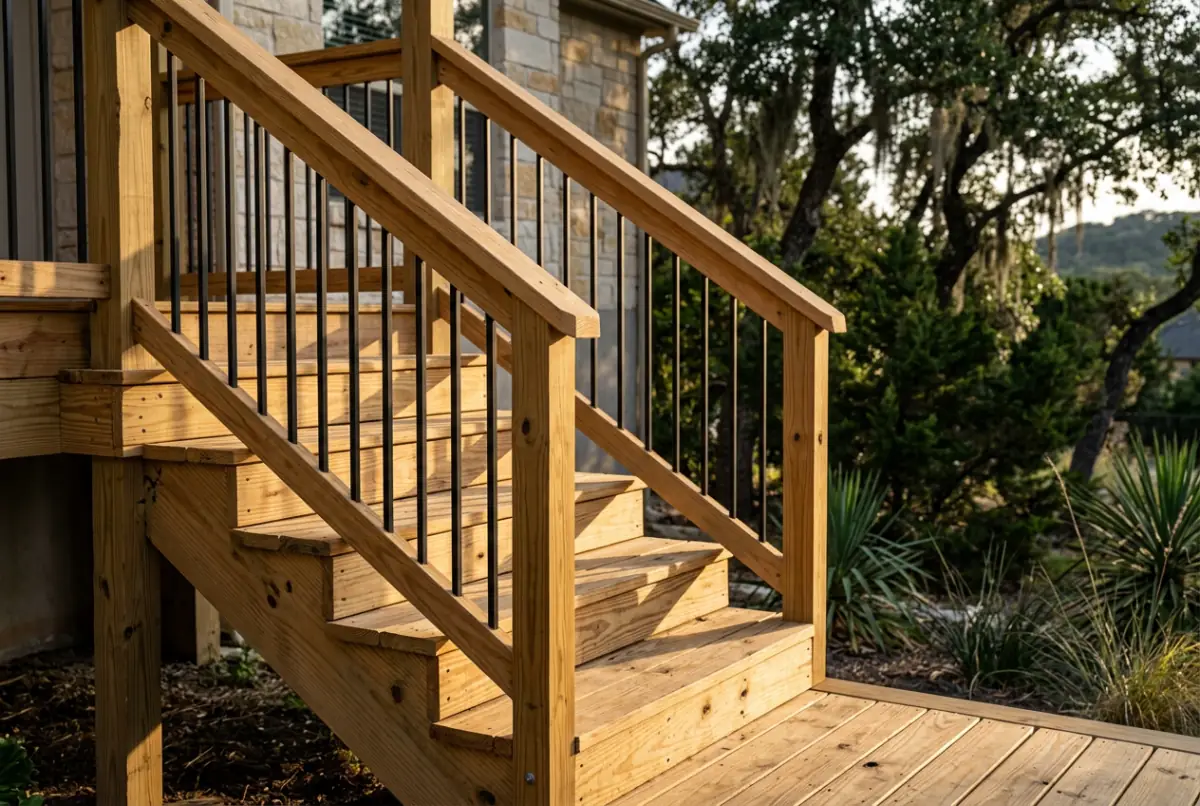
Where Home Built Decks Go Wrong
- Footings. Posts set on blocks or shallow holes sink and lean over time. Central Texas clay makes this worse, because it swells when wet and shrinks in a dry summer.
- The ledger board. This is the board that ties the deck to the house. Without the right bolts and flashing, water gets behind it and rots the wall.
- Joist spacing. Joists too far apart make a bouncy deck. Composite boards are less forgiving here than wood.
- Railings. A rail post that is only nailed will loosen. Posts need bolts and blocking to hold a person who leans on them.
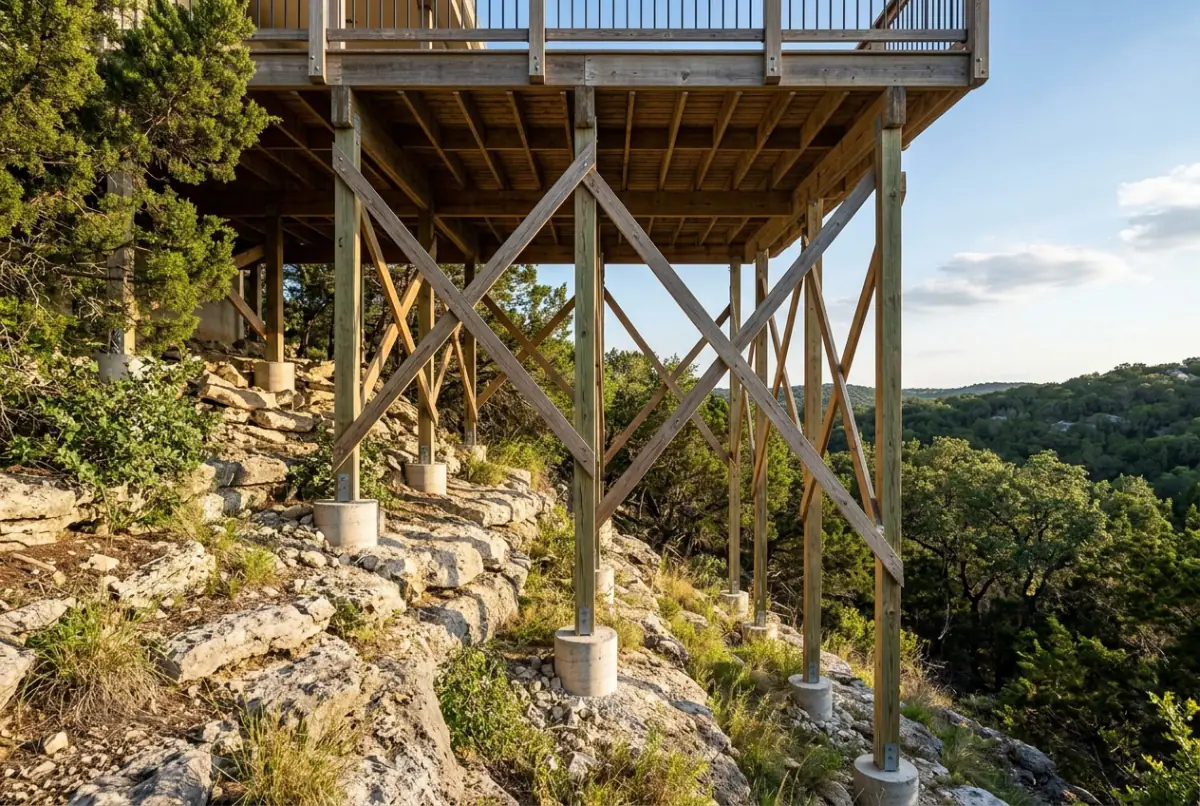
What a Builder Should Handle
A good builder sizes the footings for your soil and slope, not for a generic yard. On Hill Country lots that can mean cutting into limestone. On prairie clay it means going deeper.
The builder should also tell you whether your city wants a permit and plans. That depends on height, size and whether the deck attaches to the house.
| Deck type | DIY fit | Why |
|---|---|---|
| Low, freestanding, small | Often fine | No ledger and a short fall |
| Attached to the house | Hire out | Ledger flashing and bolts |
| Raised on a slope | Hire out | Tall posts, bracing, guards |
| Hot tub or heavy load | Hire out | Footings and framing sized for weight |
Questions to Ask Any Deck Builder
- Will you pull the permit if my city needs one?
- How deep will the footings go on my lot, and why?
- How will the deck attach to my house, and how will you flash it?
- What joist spacing will you use for the boards I picked?
- Is the estimate written, and what does it include?
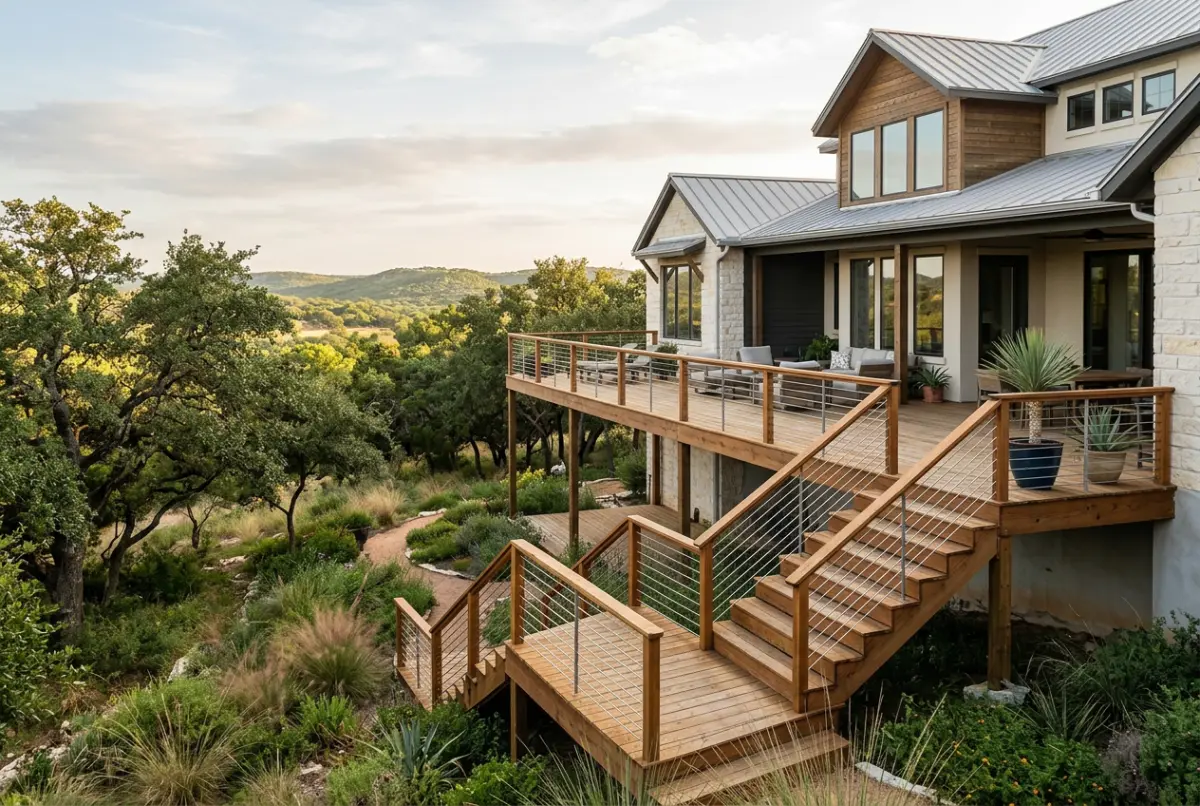
The Gaps
Most DIY advice stops at board choice and stain color. It skips the two parts you cannot see later, the footings and the ledger. Those are the parts that decide whether the deck is still level in ten years.
Answers in a Sentence
Is a ground level deck safe to build yourself?
Often yes, if it stands on its own footings and does not attach to the house.
What is the most common deck failure?
Water rot at the ledger board where the deck meets the house.
Do footings really need to go deep in Austin?
On clay they do, because shallow footings move as the ground swells and shrinks.
Where We Got This
- Work Exempt from Building Permits, City of Austin Development Services Department
- 2021 IRC Residential Deck Code Provisions, webinar handout, Pennsylvania Housing Research Center, Penn State
Elsewhere on the Site
Get a Free Estimate
Tell us what you want built and we will call you back to set up a time to look at it. Estimates are free and written.
(210) 876-1998
Open every day, 9 AM to 5 PM