
4 Things That Set Deck Footing Depth in Austin
You are standing in the yard with a post hole digger and a string line. Every video you watched says to dig below the frost line. Then you remember that Austin ground almost never freezes hard. So how deep does each hole really need to go?
A deck footing in Austin must sit at least 12 inches below undisturbed ground. The frost line rarely sets the depth here. The ground does, because blackland clay cracks 12 inches deep or more in a dry spell, and Hill Country lots often hit limestone first.
- The code floor is 12 inches below undisturbed ground.
- The frost rule applies when the deck is attached to the house.
- Clay east of I 35 can crack 12 inches deep or more.
- On rock, ask the plan reviewer before you stop digging.
- Footing width grows with the deck area each post carries.
1. The 12 Inch Code Minimum
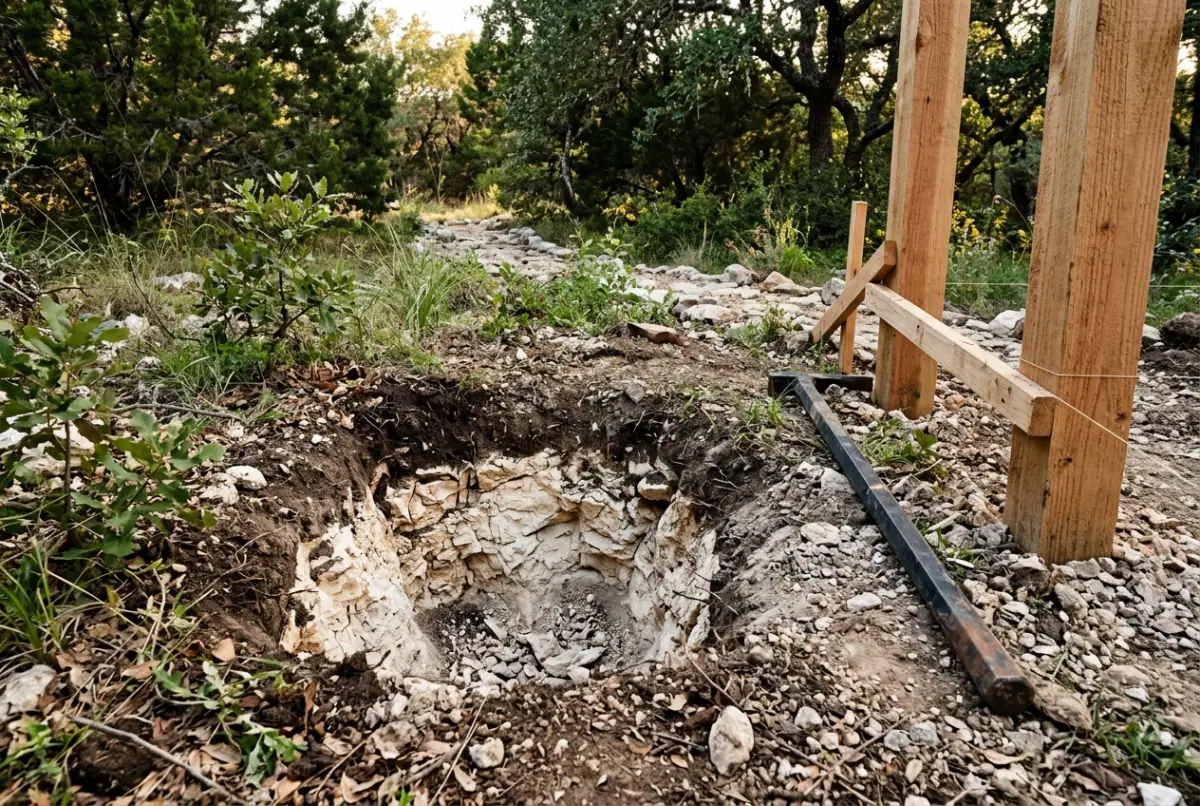
Austin builds to the 2024 International Residential Code with local changes, per the city ordinance that adopted it. Section R507.3.2 of that code says deck footings go at least 12 inches below the undisturbed ground surface. You can read it in the 2024 Texas residential code, chapter 5.
Undisturbed means native ground. Loose fill, old flower beds and the dirt you just pulled from the hole do not count. Measure from the native soil, not from the top of a pile.
One small deck can skip footings. A free standing deck of 200 square feet or less can sit on precast pier blocks if its walking surface stays 20 inches or less above grade. Austin's permit exemption uses 30 inches, which is a different test. A deck 24 inches up may need no permit and still need real footings. The Austin deck permit rules guide covers that exemption.
2. The Frost Rule, and Why It Rarely Rules Here
Section R507.3.3 adds frost protection when a deck is attached to a house built for frost. The footing must go below the frost line in the local code table, bear on solid rock, or use another approved method.
In Central Texas that frost line is a small number. The North Central Texas Council of Governments recommends a 6 inch frost line for the Dallas and Fort Worth area. Austin sits farther south, in milder winters. Where the local frost line is under 12 inches, the 12 inch rule is the deeper one.
Freezes still happen. The National Weather Service Austin climate summary counts about 12 sub freezing days a year at Camp Mabry. Austin Bergstrom airport, 10.7 miles away, averages 33. Low ground near Onion Creek can run 10 degrees colder on a clear winter night. Ask your city plan reviewer for its frost value as of November 2026, since cities set it, not the builder.
3. Clay East of I 35
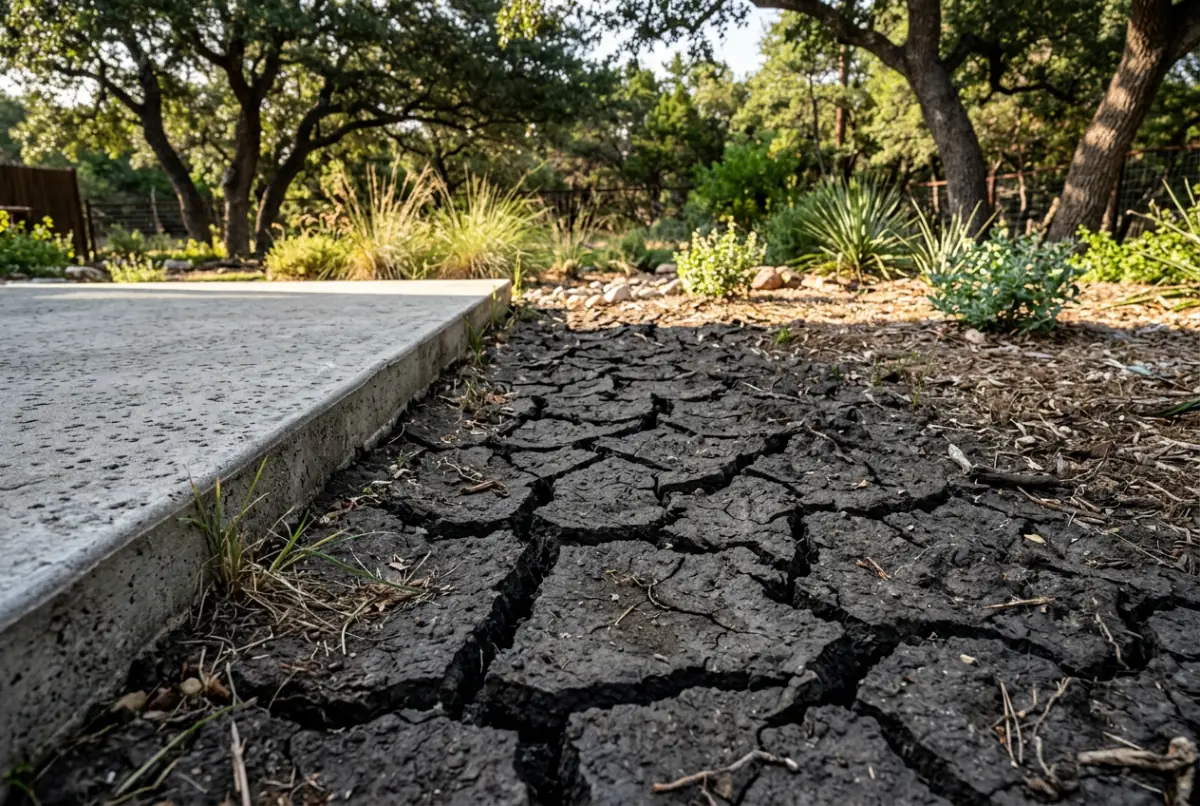
Much of the prairie east of Austin is Houston Black clay. The USDA soil series sheet says dry Houston Black opens cracks 0.5 to 4 inches wide. Those cracks run from the surface down 12 inches or more.
That means a footing that stops at exactly 12 inches sits at the bottom of the crack zone. The Texas Water Development Board notes this soil swells and shrinks so much that it often limits building in cities. A footing in that layer can move as the clay swells after rain and shrinks in a dry summer.
So on black clay, treat 12 inches as the floor, not the goal. Ask any builder how deep the holes will go on your lot, and why. A good answer names your soil. It does not just quote the code.
Before any powered auger goes in, read the Texas 811 guide for footings.
4. Rock West of the Escarpment
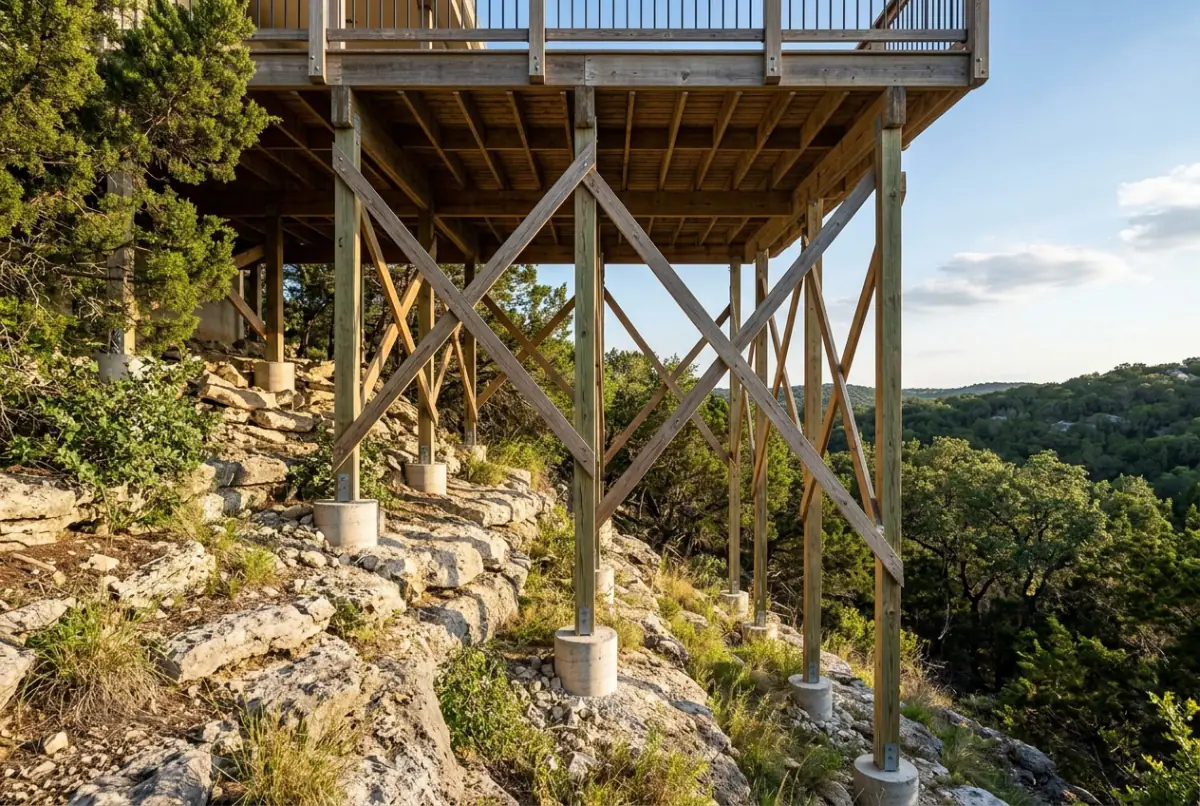
The Balcones Escarpment splits the metro. To the west, the Edwards Plateau is thin soil over limestone. Elevation inside Austin climbs from about 400 feet in the southeast to just over 1,000 feet in the northwest, per the weather service summary.
On those lots a post hole can hit rock well before 12 inches. The frost section lets a footing bear on solid rock. Whether that also meets the 12 inch depth rule on your lot is a question for the plan reviewer. Get the answer in writing before you pin a post to rock.
Loose surface stone is not solid rock. A footing should sit on sound limestone, cut flat, or be carried down to it. Steep lots add bracing and taller posts, covered in the hillside deck guide.
Footing Size by the Area Each Post Carries
Depth is half the job. Table R507.3.1 in the 2024 code sets footing size by the deck area each post holds up. These rows assume a 40 pound per square foot live load and soil that bears 1,500 pounds per square foot.
| Deck area per post | Square footing | Round footing | Footing thickness |
|---|---|---|---|
| 5 sq ft | 7 in | 8 in | 6 in |
| 20 sq ft | 10 in | 12 in | 6 in |
| 40 sq ft | 14 in | 16 in | 6 in |
| 60 sq ft | 17 in | 19 in | 6 in |
| 80 sq ft | 20 in | 22 in | 7 in |
A worked example helps. Say posts stand 8 feet apart on a beam, and joists span 10 feet from the house to that beam. Each post carries about half the joist span times the post spacing, so 5 feet by 8 feet. That is 40 square feet, which calls for a 16 inch round footing, 6 inches thick.
The code allows you to work out values between rows. It does not allow you to go past the last row. Bigger loads, like a hot tub, need a design of their own.
The Gaps
Most footing guides are written for places with a deep frost line. They tell you to dig for frost and leave the size to local code. In Central Texas the frost line is the smallest number in play. The real risks are a footing that ends inside the clay crack zone and a footing too narrow for its load. Few guides print the size table at all, and fewer split the metro into clay and rock.
Answers in a Sentence
How deep do deck footings need to be in Austin?
At least 12 inches below undisturbed ground, and deeper where clay or the plan reviewer calls for it.
What is the frost line in Central Texas?
Each city sets its own value, and the North Central Texas regional code uses 6 inches.
Does a small low deck need footings?
Not if it stands alone, covers 200 square feet or less, sits 20 inches or less above grade and rests on precast pier blocks.
How wide should a deck footing be?
For 40 square feet of deck per post on 1,500 pound soil, the code table calls for a 16 inch round or 14 inch square footing.
Can a deck footing sit on limestone?
The frost section allows a footing to bear on solid rock, so confirm the depth with your plan reviewer.
Where We Got This
- City of Austin ordinance adopting the 2024 Residential Code, City of Austin City Council
- 2024 Texas Residential Code, Chapter 5 Floors (Section R507 Decks), UpCodes, International Code Council text
- Austin Climate Summary, National Weather Service Austin/San Antonio
- 2021 IRC Recommended Amendments, North Central Texas, North Central Texas Council of Governments
- Official Soil Series Description, Houston Black, USDA NRCS Soil Survey Staff
- Houston Black, Texas State Soil (fact sheet), USDA NRCS, hosted by Texas Water Development Board
- Balcones Escarpment, Texas State Historical Association, Handbook of Texas Online
- Edwards Plateau, Texas State Historical Association, Handbook of Texas Online
Elsewhere on the Site
Where to Find Deck and Patio of Austin
706 W Ben White Blvd A, Austin, TX 78704
Get a Free Estimate
Tell us what you want built and we will call you back to set up a time to look at it. Estimates are free and written.
24/7 Phone (737) 379-6751
Phones Answered 24/7